Recent gardening experts have been championing a simple but powerful idea known as keystone planting . Instead of trying to grow as many different plants as possible, the approach focuses on choosing a relatively small number of native species that support the greatest variety of wildlife.
It's an encouraging message because it proves that successful rewilding isn't about having a huge garden. Whether you have a back garden, a courtyard, a balcony or a few containers, carefully choosing what you plant can have a surprisingly large impact.
At LettsSafari, we believe this perfectly reflects the future of small-scale rewilding. Thousands of people making small, thoughtful changes can collectively create thriving habitats for wildlife across the UK.
In nature, some species are disproportionately important. Ecologists call these keystone species because many other plants, insects and animals depend upon them. The same principle applies to gardens.
Certain native plants provide food, shelter and breeding opportunities for far more insects than ornamental alternatives. More insects attract more birds. More birds help control pests and disperse seeds. Before long, your garden becomes part of a much larger ecosystem.
Rather than thinking about individual flowers, keystone planting encourages us to think about the entire food web.
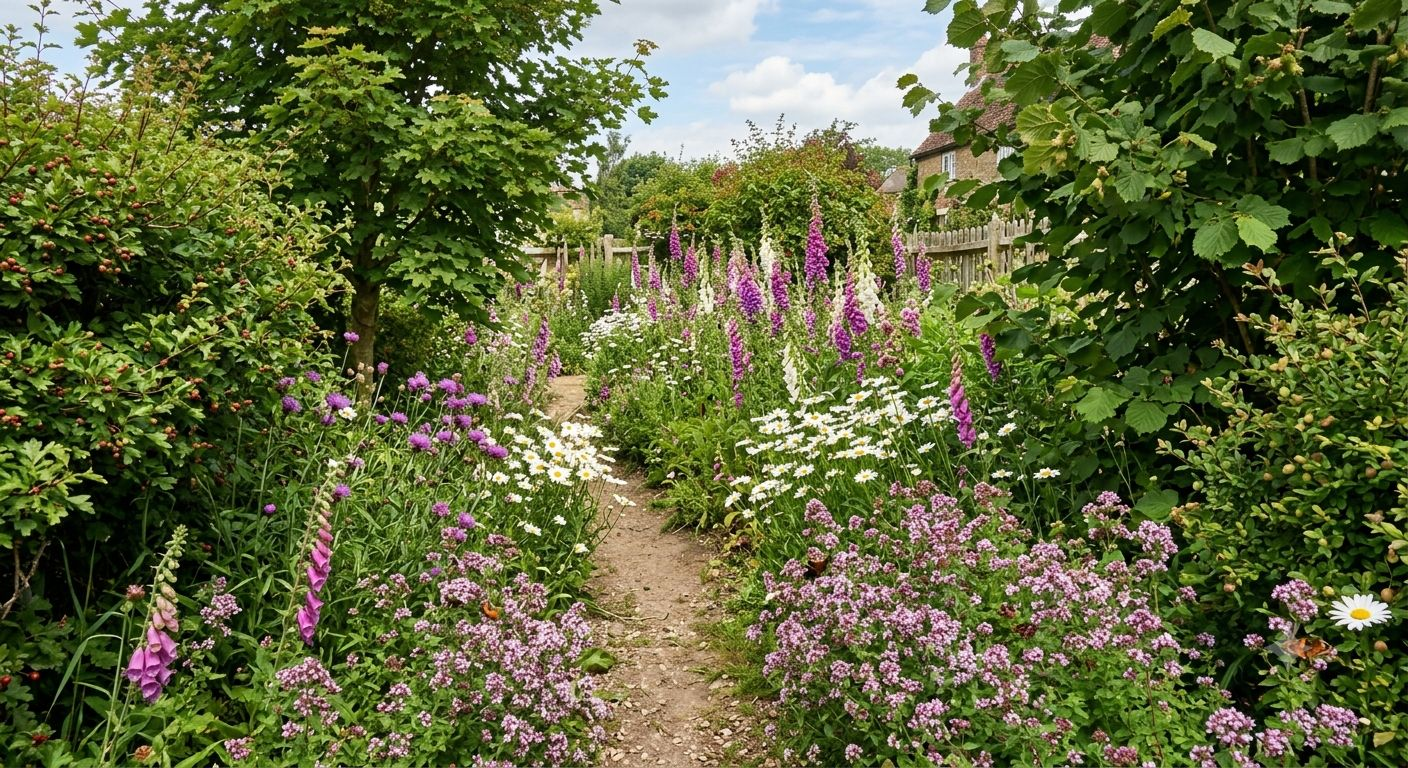
Native plants have evolved alongside Britain's wildlife for thousands of years. That means:
Many imported ornamental plants are beautiful but provide relatively little food or habitat for wildlife. Replacing just a few of these with native alternatives can significantly increase the biodiversity of your garden.
The beauty of this approach is that you don't need to redesign your entire garden. Start small.
Look for plants that naturally occur in the UK.
Popular choices include:
These species support a wide variety of pollinators and insects throughout the growing season.
Clusters of the same flowers are much easier for bees and butterflies to spot than isolated plants. A group of five or six plants often provides far greater value than scattering individual specimens around the garden.
Wildlife also needs:
Leaving a small patch of your garden a little untidy can often provide more value than another flower bed.
Reducing pesticides allows beneficial insects to flourish. More insects mean more natural pest control and more food for birds. Healthy ecosystems are remarkably good at finding their own balance.
Aim to provide nectar from early spring through to late autumn. A continuous supply of flowers supports pollinators throughout their entire life cycle.
One of the biggest myths about rewilding is that it requires large areas of land. In reality, urban gardens collectively cover hundreds of thousands of hectares across the UK. If each household introduced just a few keystone plants, together they would create an enormous network of connected habitats. Every container, courtyard, balcony and front garden becomes another stepping stone for wildlife.
At LettsSafari, we're passionate about making rewilding practical and accessible. Alongside supporting larger conservation projects, we help people discover simple ways to improve biodiversity where they live. Our guides, ideas and community focus on achievable actions, including:
It begins at home.
Keystone planting reminds us that success isn't measured by the size of your garden but by the choices you make within it.
Plant one native shrub.
Add a container full of pollinator-friendly flowers.
Leave a corner wild.
Create a small pond.
Each step helps reconnect wildlife with the places where people live.
Together, millions of small actions can create one of the UK's largest habitats.
****************************************
Subscribe to LettsSafari
Support our rewilding parks, get exclusive content of our projects and even receive expert tips to transform your garden, community, public or work spaces into a wildlife haven.
🌱 For every 10 new subscribers we plant a tree a year.
🦔 For every 100, we release an endangered animal.
🌳 And for every 10,000 we create a new rewilding safari park a year!
Make A Difference: Together We Can Rewild To Restore Nature.
Sign up TODAY
!
****************************************
LettsSafari is a community dedicated to making rewilding simple and accessible. We provide practical ideas, inspiration and initiatives that help people support wildlife from their own gardens, balconies and local communities.
Not at all. Even a window box, balcony or small courtyard can provide valuable habitat for pollinators and birds when planted thoughtfully.
Keystone plants are native species that support a disproportionately large number of insects, birds and other wildlife, making them some of the most valuable plants you can grow.
Many of the best actions are inexpensive. Planting native species, leaving areas less tidy, adding water and reducing pesticide use can all improve biodiversity without major investment.
Start by making one small change for wildlife. Explore LettsSafari for practical guides, seasonal tips and simple projects that help you create a more nature-friendly space while contributing to wider rewilding efforts.
