The UK government has recently announced a new Natural History GCSE that will teach students practical biodiversity skills, including creating wildflower-friendly gardens, understanding local habitats and carrying out fieldwork in schools, parks and community spaces. The qualification is designed to help young people understand nature recovery through hands-on action rather than just classroom learning.
While the qualification is aimed at young people, it highlights a much bigger trend: nature recovery is becoming something everyone can participate in, regardless of age, experience, or the size of the space available.
The encouraging message is that you don't need hundreds of acres to help wildlife. A garden, balcony, courtyard, community space, or local park can all play a role.
At LettsSafari, this idea sits at the heart of everything we do.
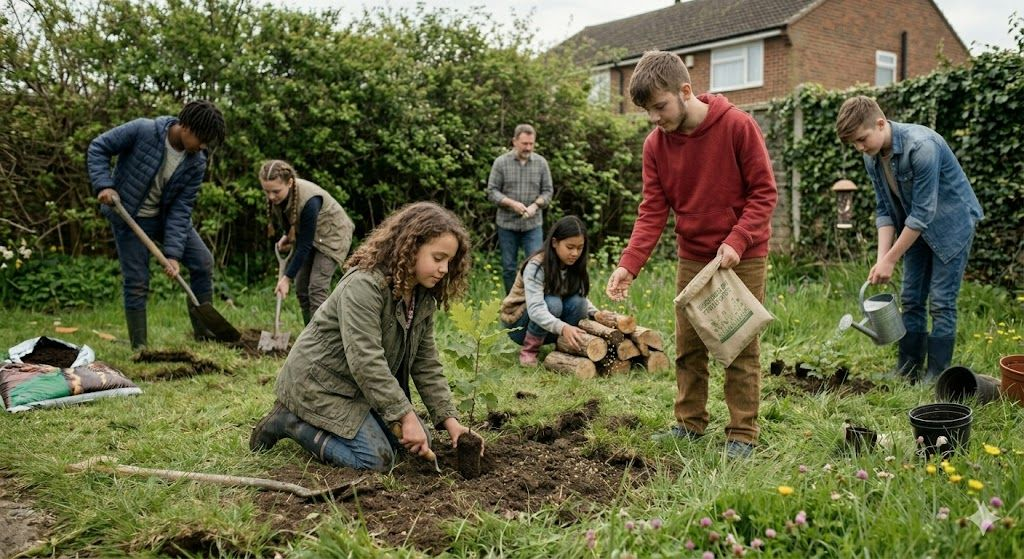
For many years, conservation was often viewed as something that happened in large national parks or remote countryside locations. Today, scientists and conservationists increasingly recognise that urban and suburban spaces can make a meaningful contribution to biodiversity.
Small habitats can provide:
When thousands of people make small changes, the collective impact can be significant.
The new GCSE will encourage students to engage directly with nature. Here are five simple actions anyone can take today.
Native plants have evolved alongside local wildlife and often provide the best food sources for pollinators.
Good options include:
Even a small container or window box can support bees and butterflies.
One of the easiest rewilding actions is simply mowing less frequently.
Allowing grass to grow longer can:
Consider leaving a section of your lawn unmanaged throughout the growing season.
Wildlife often struggles to find clean water in urban environments.
Simple solutions include:
Even the smallest water source can attract a surprising variety of species.
Wildlife needs places to hide, breed, and overwinter.
You can create shelter by:
Nature rarely benefits from perfect tidiness.
One of the most valuable lessons from the new GCSE is observation.
Spend time identifying:
Understanding local wildlife helps guide future rewilding efforts.
At LettsSafari, we believe nature recovery should be accessible to everyone.
Many people want to help wildlife but are unsure where to start. That's why we provide practical guidance that helps individuals make meaningful changes in their own gardens, balconies, and community spaces.
Every subscription helps support LettsSafari's nature restoration projects while also giving members simple, achievable ways to increase biodiversity at home.
Small actions may seem insignificant in isolation. Together, they become a movement.
The introduction of a Natural History GCSE reflects a growing understanding that nature recovery is not just the responsibility of governments, charities, or landowners. It belongs to all of us. Whether you have a large garden, a balcony, a shared green space, or simply a few containers outside your front door, you have the opportunity to support wildlife.
The most important step is not starting big.
It's simply starting.
****************************************
Subscribe to LettsSafari
Support our rewilding parks, get exclusive content of our projects and even receive expert tips to transform your garden, community, public or work spaces into a wildlife haven.
🌱 For every 10 new subscribers we plant a tree a year.
🦔 For every 100, we release an endangered animal.
🌳 And for every 10,000 we create a new rewilding safari park a year!
Make A Difference: Together We Can Rewild To Restore Nature.
Sign up TODAY
!
****************************************
LettsSafari is a subscription service that helps fund nature restoration projects while providing practical advice and guidance on how individuals can support wildlife at home.
No. Many LettsSafari members have small gardens, balconies, patios, or shared outdoor spaces. Even small areas can make a valuable contribution to biodiversity.
Your subscription helps support rewilding and nature restoration initiatives while enabling LettsSafari to share practical conservation knowledge with a wider community.
Begin with simple actions such as planting native flowers, reducing mowing, adding water for wildlife, or creating habitat areas. Small changes often produce surprisingly positive results.
Absolutely. Urban gardens, balconies, parks, and community spaces provide important habitats and wildlife corridors that help species survive and thrive.
