Today we begin serialising LettsSafari's definitive guide to garden rewilding — looking at how every garden can become a living nature reserve. We examine habitats, flaura and fauna, including guides, tables and tips for Britain, Northern Europe and North-East North America.
We are publishing LettsSafari's latest book first and exclusively at LettsSafari+ — week by week, chapter by chapter, section by section. We hope you will enjoy reading it as much as we have enjoyed putting it together. Garden rewilding is a journey. We're excited to share our journey with you through "The Nature Reserve Next Door: How to Turn Any Garden Into a Wildlife Sanctuary".
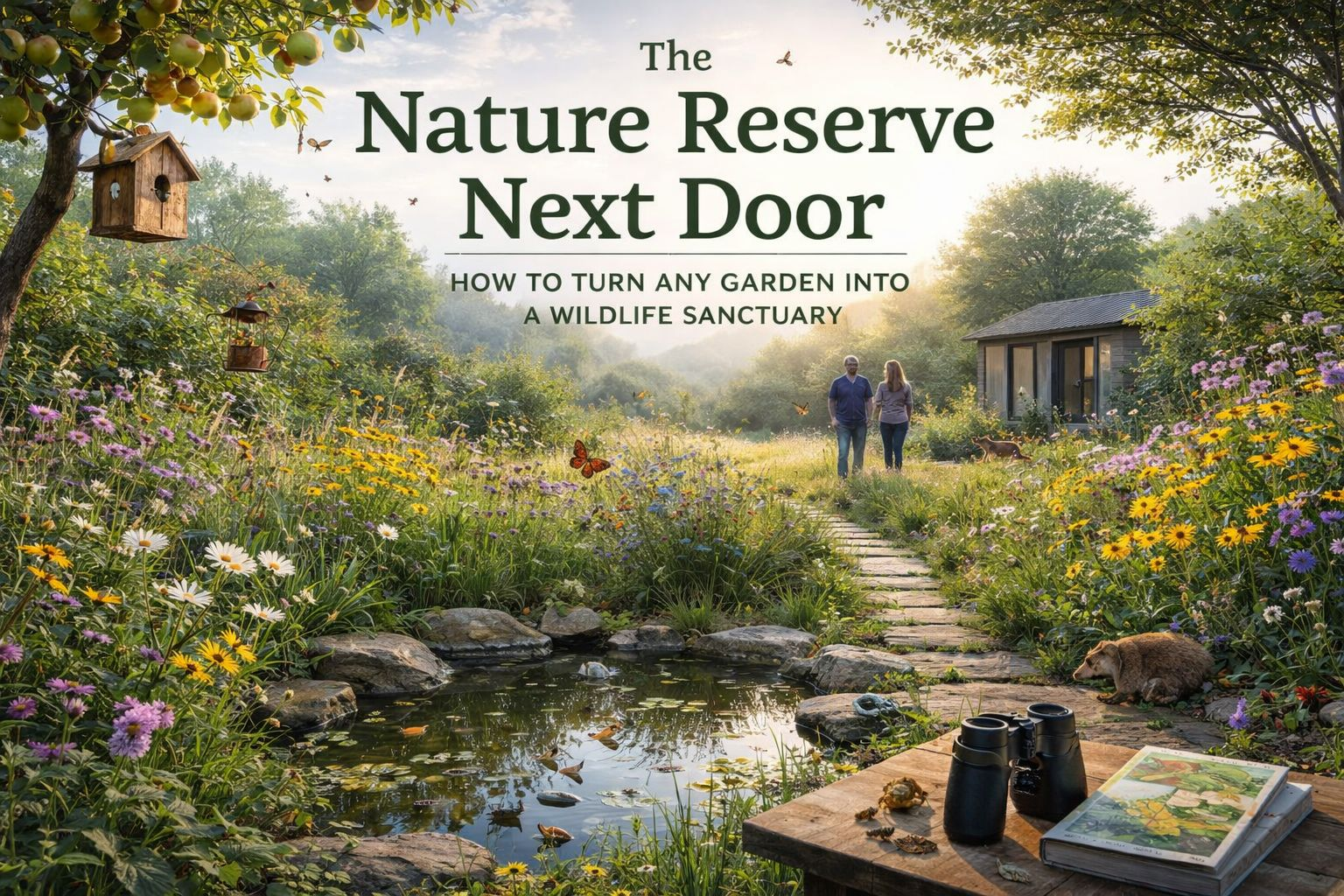
We start with the book's Contents so you know what to expect over the coming weeks and months, followed by the Introduction.
Introduction: The Journey Starts Here
Chapter One: What Is Garden Rewilding?
Chapter Two: Why Rewilding Your Garden Is the Right Thing to Do
Chapter Three: The LettsSafari Design Method
Chapter Four: Habitat Modules — Building the Mosaic
4.1 Wild Grasses and Mini-Meadows
4.2 Wildflower and Pollinator Beds
4.3 Shrubs, Scrub, and the Wild Corner
4.4 Trees, Hedges, and Climbers
4.5 Pond, Bog, and Wetland Edges
4.6 Deadwood, Stones, Compost, and Microhabitat Engineering
Chapter Five: Step-by-Step Build Plans
5.1 Small Urban Garden
5.2 Medium Urban Garden
5.3 Cottage Garden Rewilding
Chapter Six: The Seasonal Calendar
Chapter Seven: Case Studies and Evidence
Chapter Eight: LettsSafari as a Movement
Appendices: Plant Palettes, Resources, and Quick-Reference Cards
Safari is a Swahili word meaning 'journey'. This guide is an invitation to begin that journey — not in East Africa, but in your own back garden.
Somewhere between the last great sweep of suburban lawn-mowing and the first unfurling of a wild knapweed flower, a revolution is taking place. It is quiet, unhurried, and carried out with a spade and a packet of seeds rather than a placard. It happens in terraced gardens in Leeds and back yards in Brooklyn; in walled cottage gardens in Herefordshire and community plots in Toronto. It is happening in millions of small places at once, and it is beginning to change the landscape.
This is garden rewilding. And this book is your definitive guide to doing it.
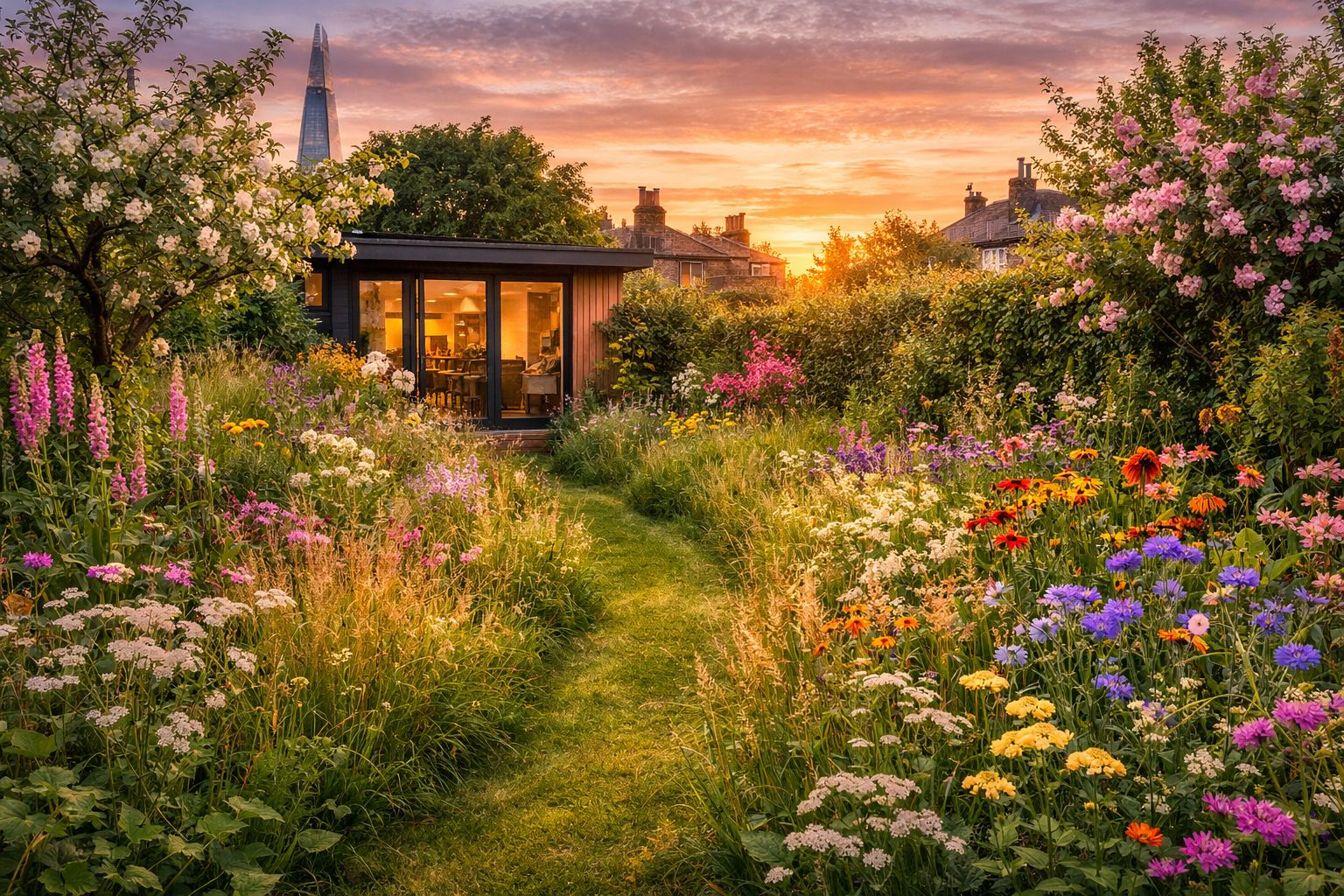
The LettsSafari approach was born from a simple conviction: that the most powerful act of ecological restoration available to most people is not writing to their MP or signing a petition — though both matter — but transforming the land they actually own or steward. A garden. A school plot. A housing association courtyard. A strip of land behind a fence. These are the places where the biodiversity crisis can be turned around, one decision at a time.
We use the word 'safari' deliberately. Not as a tourist fantasy, but as a reframe: your garden, rewilded, becomes a place of daily ecological encounter. A place where you learn to read the signs — the bat flickering over long grass at dusk, the bumblebee navigating a drift of native knapweed, the slow emergence of a newt from a pond margin in spring. These moments are not exotic. They are the rightful experience of anyone who cultivates a piece of ground and chooses to welcome life.
This guide is written for anyone who tends a piece of outside space, from a six-square-metre courtyard to a two-acre paddock, and wants to do more with it ecologically. You do not need to be an expert botanist, a licensed ecologist, or a professional landscaper. You need curiosity, a modest toolkit, and the willingness to rethink what a 'good garden' looks like.
The guidance spans three geographical regions: Britain and Ireland, Northern Europe (particularly the Netherlands, Belgium, Germany, Scandinavia, and France), and the North-East of North America (the eastern seaboard states and provinces, from the Carolinas north through New England and into Ontario and Québec). These regions share a temperate climate, broadly similar ecological principles, and many analogous habitat types — but their native species lists differ substantially, and this guide respects and celebrates those differences throughout.
The guide is structured as a progressive journey. You can read it cover to cover — and we encourage that on a first read — or dip into individual chapters as you tackle specific projects. The core garden rewilding design method appears in Chapter Three; the habitat modules in Chapter Four; and the practical build plans in Chapter Five. Throughout, you will find:
Evidence summaries — the science behind the recommendations
Plant palettes — specific, regionally appropriate species for each habitat type
Construction notes — practical, tool-level guidance for building each habitat
LettsSafari Safari Notes — observations from real rewilding projects, including LettsSafari's own Devon rewilding sites
Seasonal guidance — when to act, when to leave alone, and when to simply watch
This is not a book that tells you rewilding is someone else's job. It is a book that tells you the job starts here, in the ground beneath your feet.
Let the journey begin.
Start your rewilding journey with us. Become a member of LettsSafari.
