Most gardens are designed like spreadsheets: lawn here, border there, fence at the back, patio at the front, neat boxes with hard edges. But nature doesn’t work like that. Nature is all about gradients . The most exciting thing we’re publishing at LettsSafari next is a practical, detailed guide to ecotones : the transition zones between habitats (like lawn-to-meadow, hedge-to-trees, pond-to-damp meadow). These “in-between” areas are often where life gets densest, because they can support species from both neighbouring habitats plus specialist species that thrive in the transition itself.
Here’s the killer insight: your domestic garden is already full of ecotones waiting to happen. That strip where the lawn meets the fence. The dead space between a border and paving. The edge around a pond (or even a damp corner that always holds water). Right now those edges are usually abrupt. Our guide, coming out next week, shows how to turn them into soft, layered transitions: let the lawn fade into longer grasses and wildflowers; let wildflowers blend into larger plants and shrubs; let shrubs reach toward small trees; let pond edges blur with marginal plants and moisture-loving vegetation. No grand redesign required, just a smarter way of joining the dots.
The guide is built for real life: small and medium gardens, courtyards, and micro urban parks , with beginner-friendly steps you can do in weekends. You’ll get practical ecotone “recipes” (plug-and-play layouts), plus clear guidance for Britain first (with easy swap lists for temperate Europe and North America). And we’ll go beyond vibes: we’ll recommend specific native-or-near-native plants, shrubs, hedges and small trees - and explain what they attract, from pollinators and hoverflies to songbirds, hedgehogs and pond wildlife.
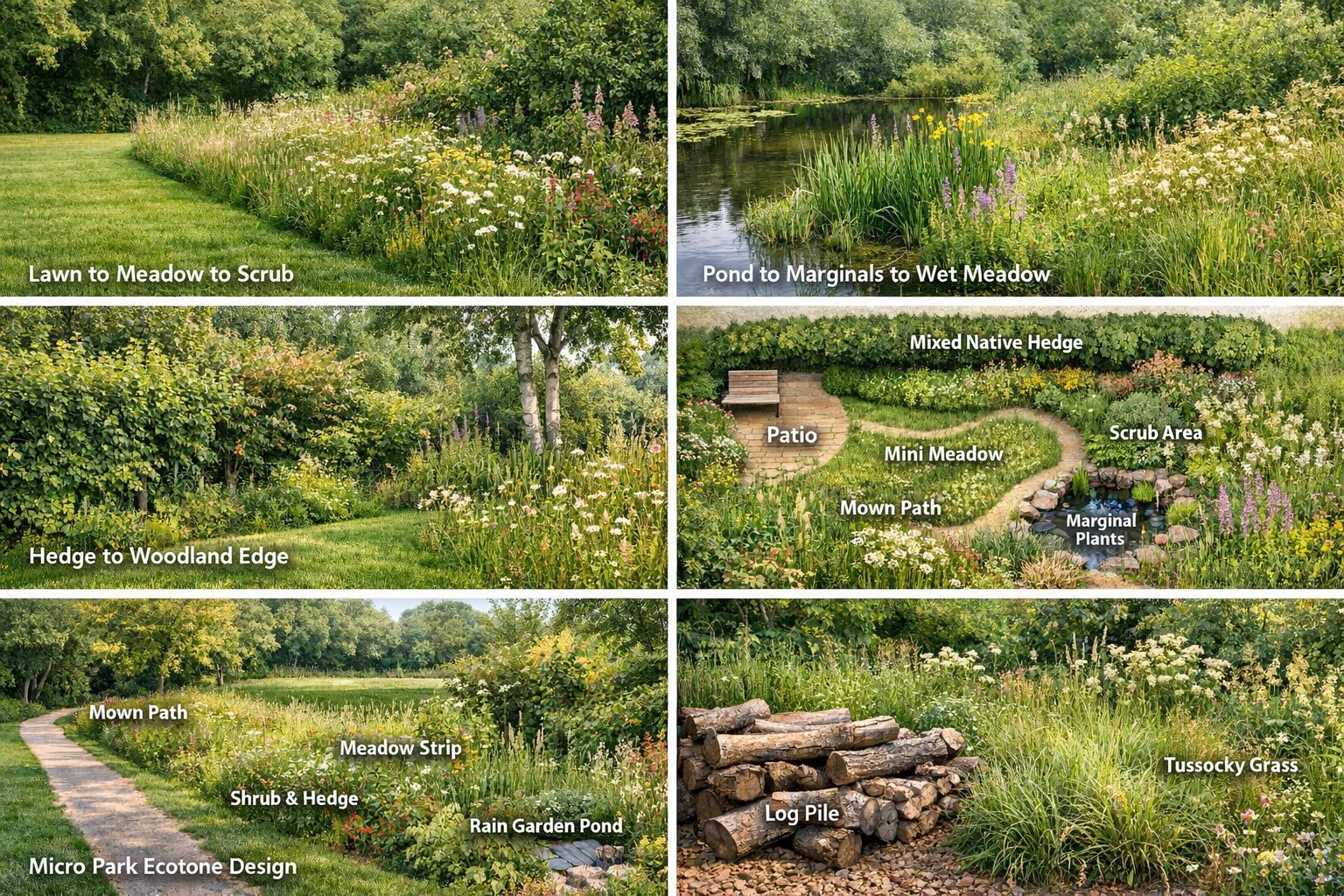
Expect a practical, action-oriented guide: quick site mapping, choosing your core habitats, converting hard lines into living bands, and a simple maintenance rhythm that keeps edges flowering, fruiting and sheltering year-round. We’ll show you how to create “flow” of shade, moisture and cover, so the garden starts behaving like a miniature landscape instead of a set of isolated features. It’s the LettsSafari mission in action: smaller-scale rewilding to the masses , one brilliant edge at a time.
If you’re a LettsSafari member, you’re going to love this guide, because it makes rewilding feel obvious. And if you’re on LettsSafari+ (or thinking about it), it’s the perfect community challenge: share your before/after edge photos, log what arrives, and swap the ecotone wins that work in real gardens. Starting next week: your “boring boundary line” is about to become the most alive part of your garden.
Start your rewilding journey today - become a member of LettsSafari .
