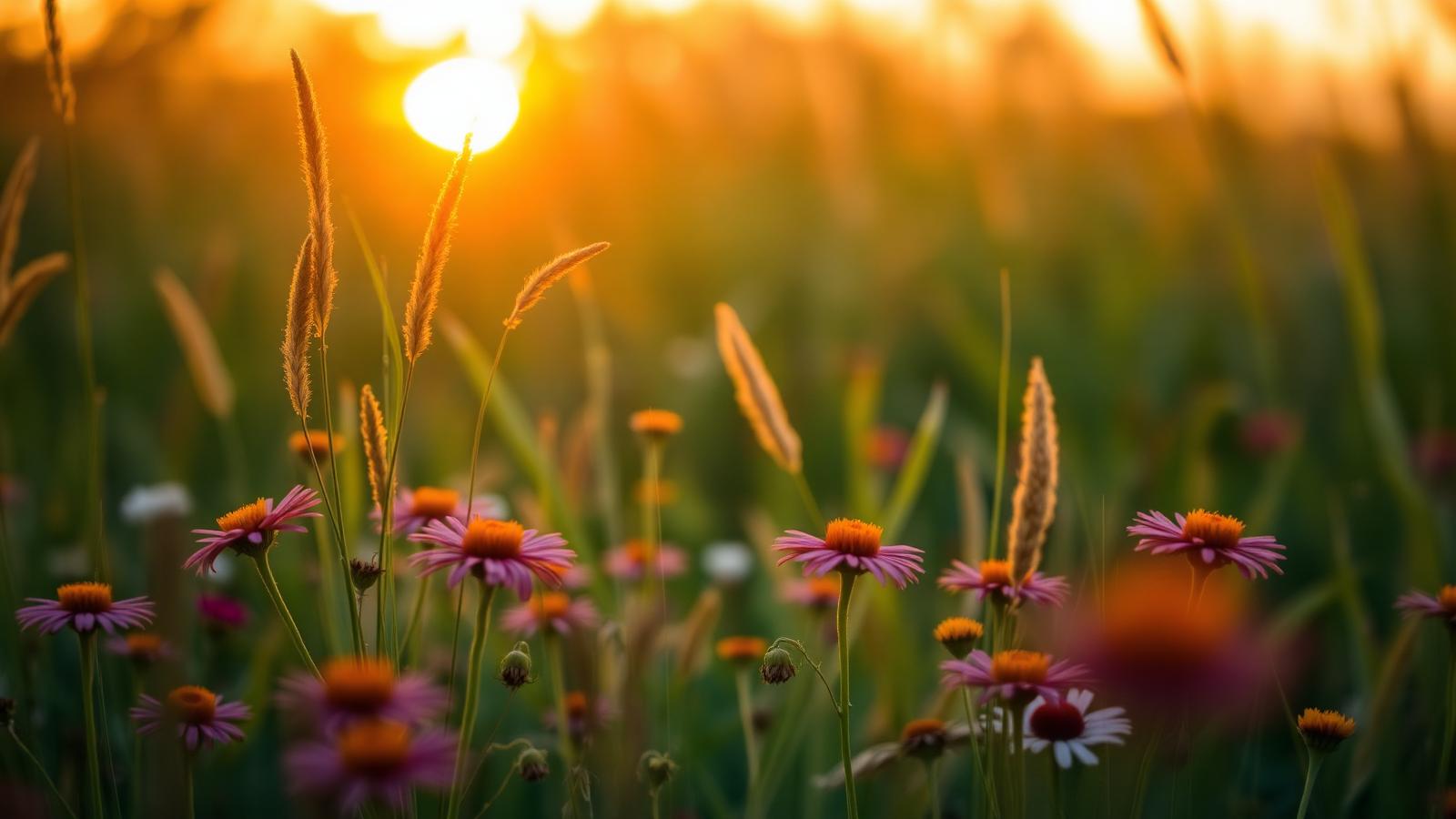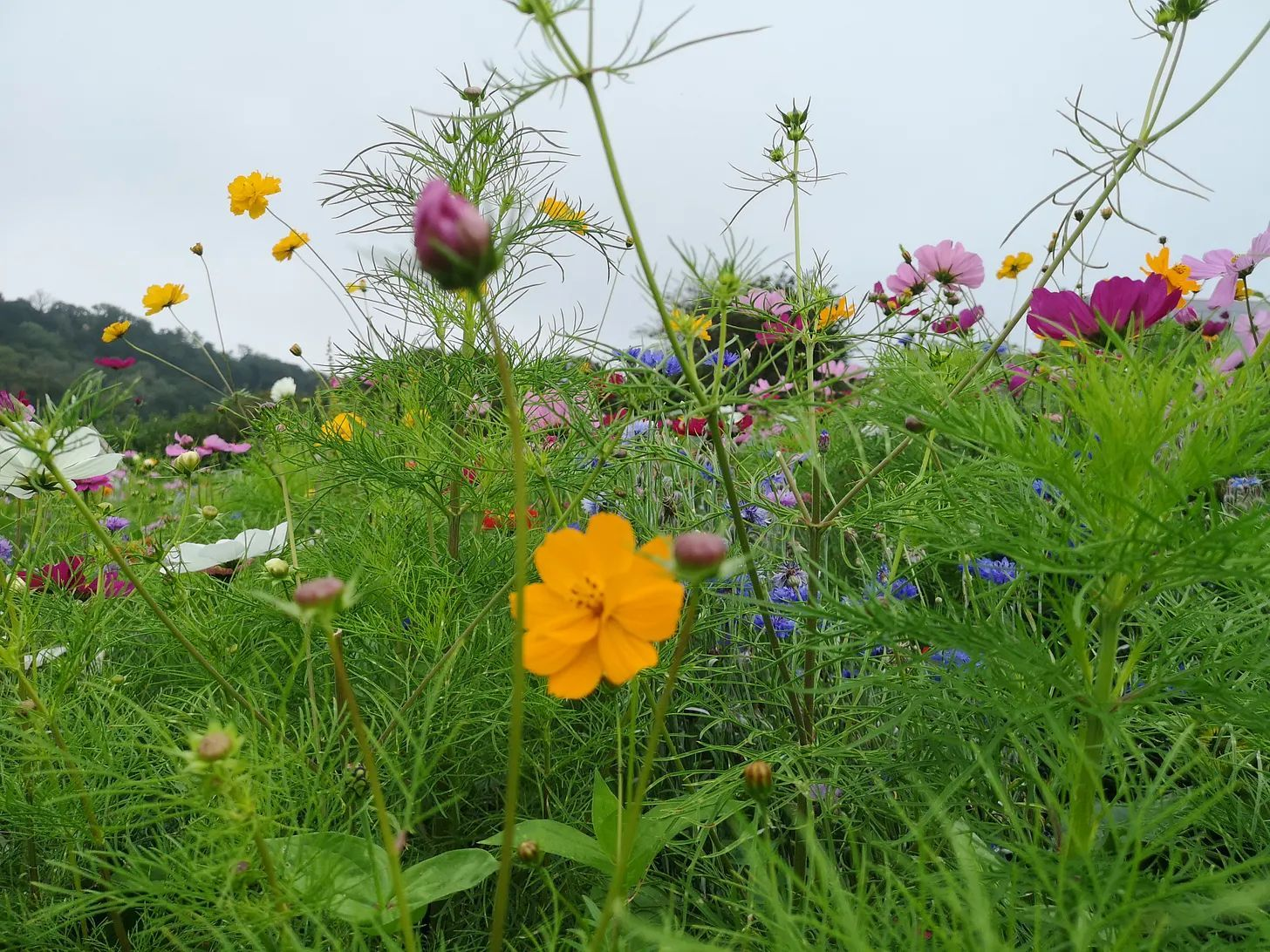
A former farm field in Norfolk has become a species-rich wildflower meadow with remarkably little human intervention. Its story offers a simple lesson for anyone interested in rewilding: sometimes helping nature means doing less, doing it differently, and giving wildlife time to return.
Sayer’s Old Meadow in North Norfolk , a former arable field has transformed into a flourishing wildflower meadow. More than 150 plant species have now been recorded on the site, which was previously used for intensive agriculture. The meadow also supports butterflies, hoverflies and birds. Rather than being replanted with a commercial wildflower seed mix, the land was largely allowed to regenerate naturally.
The approach has been surprisingly straightforward: allow the vegetation to grow, cut the meadow for hay annually and remove the cuttings. Research from University College London found that plant diversity increased steadily during the study period. The average number of species recorded in individual survey plots roughly doubled between 2011 and 2022, with species including yellow rattle and southern marsh orchid appearing naturally.
It is an impressive ecological success story. But what can the rest of us learn from it?
You don't need a field in Norfolk to experiment with the idea.
1. Stop mowing part of your lawn
Choose a section of lawn and simply allow the grass to grow. It doesn't need to be the entire garden. A strip along a fence, an area beneath a tree or even a small corner can provide additional habitat. Watch what happens before deciding whether you need to plant anything. Existing plants may flower. New species may arrive. Longer grass can provide shelter for insects and other wildlife. The important thing is to give the space time.
2. Remove the cuttings
One of the important lessons from Sayer's Old Meadow is the role of traditional hay management. At the Norfolk site, the meadow is cut and the hay removed. Why does this matter? Removing cut vegetation gradually removes nutrients from the soil. Extremely fertile soil tends to favour vigorous grasses and a relatively small number of dominant plants. Lower nutrient levels can create opportunities for a wider variety of meadow species. So if you're trying to establish a meadow area at home, don't simply leave cut grass lying where it falls.
3. Don't judge your experiment after one summer
Rewilding operates on nature's timetable rather than ours. Sayer's Meadow developed over many years. The UCL research followed vegetation changes from 2011 to 2022 and found species richness continuing to increase over that period. Your garden isn't likely to produce thousands of orchids next spring. Instead, look for incremental changes:
- Are more plants flowering?
- Are you seeing more bees or butterflies?
- Are birds spending more time in the garden?
- Are different plants beginning to appear?
- Are there more insects among the longer vegetation?
- Treat the garden as an experiment rather than a finished landscaping project.
4. Let plants arrive before deciding what is missing
Wildflower seed mixes can be useful, particularly where natural regeneration is unlikely. But don't automatically assume you need one. Seeds can arrive through wind, birds, mammals and other natural processes. Researchers studying Sayer's Meadow believe animals such as deer may even have helped some plants colonise the site. In a garden, your equivalent seed distributors might be birds, squirrels - or simply the wind. Give natural regeneration a chance first then intervene selectively if the results need a helping hand.
5. Create different levels of wildness
Rewilding doesn't have to mean abandoning an entire garden. Try creating a patchwork. You might have:
A frequently used area - keep paths, seating areas and spaces used by children or pets relatively managed.
A lightly managed area - mow this less frequently and allow flowers such as clover and daisies to bloom.
A wild area - allow grasses and other vegetation to grow for much longer before cutting.
This creates different habitats within even a small space. It also makes rewilding much easier to live with.
6. Observe before you interfere
Perhaps the most interesting habit to borrow from the Norfolk experiment is simply watching what happens . Take photographs of your wild patch once a month. Make a note of plants you recognise. Record butterflies, bees and birds.
You'll gradually build a picture of how your small ecosystem is changing. You could even use citizen-science apps to identify species and contribute observations to biodiversity records. Suddenly, the neglected corner of the garden isn't neglected at all. It's a tiny ecological experiment.
Small spaces add up
Britain has lost the overwhelming majority of its species-rich traditional meadows over the past century. The remaining fragments are therefore enormously important for plants, pollinators and other wildlife. We can't recreate those landscapes overnight.
But we can create more places where nature has room to operate.
Gardens.
Balconies.
Community spaces.
School grounds.
Roadside verges.
Business premises.
Even a few square metres can become another stepping stone connecting wildlife through an increasingly fragmented landscape.
That's where the thinking behind LettsSafari comes in.
LettsSafari is built around the idea that rewilding shouldn't be something only governments, conservation organisations or large landowners can participate in.
You can make changes in your own space while also supporting wider small-scale rewilding projects.
It turns rewilding from something you simply read about into something you can actually participate in .
****************************************
Subscribe to LettsSafari
Support our rewilding parks, get exclusive content of our projects and even receive expert tips to transform your garden, community, public or work spaces into a wildlife haven.
🌱 For every 10 new subscribers we plant a tree a year.
🦔 For every 100, we release an endangered animal.
🌳 And for every 10,000 we create a new rewilding safari park a year!
Make A Difference: Together We Can Rewild To Restore Nature.
Sign up TODAY
!
****************************************
Frequently Asked Questions about LettsSafari
What is LettsSafari?
LettsSafari is designed to make rewilding accessible to ordinary people, helping people support practical small-scale rewilding while discovering ways to create more space for nature themselves.
Do I need a large garden to take part?
No. Rewilding can start with a lawn, balcony, patio, window box or small community space. Even small habitats can provide food and shelter for wildlife.
Does rewilding mean letting my whole garden become overgrown?
Not at all. You can rewild selectively. Keeping paths, seating areas and parts of the garden managed while allowing other sections to become wilder can create a useful mixture of habitats.
Should I plant wildflower seeds or let nature regenerate naturally?
Both approaches can work. The Norfolk example shows that natural regeneration can produce remarkable results when conditions are right. A useful first step is to see what appears naturally before deciding whether additional planting is needed.
How quickly will I see results?
Some changes can happen within weeks, particularly an increase in insects around longer grass and flowering plants. Greater plant diversity can take years. Rewilding is best treated as an ongoing process rather than a one-season project.
How does LettsSafari help beyond my own garden?
LettsSafari enables people to combine changes they make at home with support for wider small-scale rewilding activity, helping turn lots of individual actions into a larger collective contribution to nature recovery.
Source: Recent reporting by The Guardian on Sayer's Old Meadow, alongside research from UCL and the journal Restoration Ecology .
Turn reading into rewilding
You subscribe. We build parks. You safari.
£4.50 a month funds trees, wildlife and new rewilding parks — and brings you a weekly dispatch straight from the field.
Subscribe for £4.50/month