The devastating fire at Dunwich Heath in Suffolk has highlighted an increasingly important question: can rewilding help create landscapes that cope better with hotter, drier conditions? The answer is yes - but resilience comes from creating a richer mix of habitats, not simply leaving nature alone. And some of the same principles can be applied in gardens, community spaces and other small patches of land.
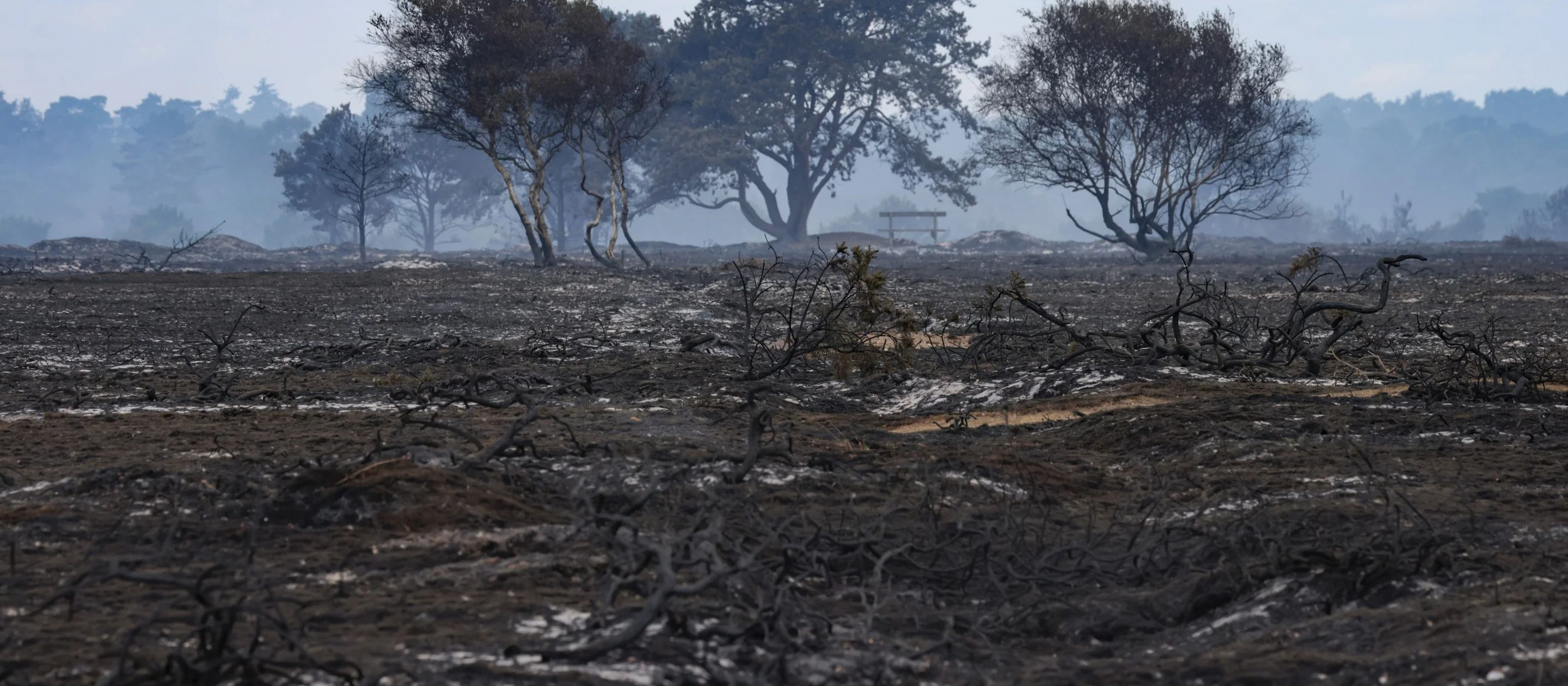
In late July 2026, fire swept across more than 112 hectares of Dunwich Heath on the Suffolk coast, damaging one of Britain's most important areas of lowland heath.
The reserve provides habitat for wildlife including nightjars, Dartford warblers, adders and specialist invertebrates. Conservationists have warned that some species have lost crucial habitat and that the effects on less mobile wildlife may be particularly severe.
The fire has also prompted a wider conversation about how we manage land as Britain's summers become hotter and drier.
And one of the answers may lie in creating more varied, nature-rich landscapes.
How can rewilding reduce wildfire risk?
Rewilding doesn't mean simply abandoning land.
At Dunwich Heath, the National Trust and RSPB already actively manage vegetation, remove material, maintain firebreaks and encourage different ages of heather. According to the National Trust, having vegetation of different ages can also help retain more moisture in the ground.
But conservationists are also looking at how nature itself can help make larger landscapes more resilient.
Possible approaches include:
- restoring wetlands that can create natural breaks in dry landscapes;
- using grazing animals to reduce accumulated dry vegetation;
- maintaining ponds and wetter areas;
- creating a mixture of woodland, scrub, grassland and open habitat;
- connecting habitats so wildlife has more places to move when conditions change.
At Dunwich, neighbouring wetlands helped limit the fire's spread in some areas. Conservationists interviewed after the fire also pointed to beavers, winter grazing and more varied habitat mosaics as potential tools for making suitable landscapes more resilient.
The principle is bigger than wildfire.
Natural England argues that larger, better-connected and healthier natural areas give wildlife a better chance of surviving periods of extreme weather. The government's Land Use Framework also identifies restoring wetlands and other nature-based solutions as part of improving resilience to climate impacts, including wildfire.
What does this have to do with your garden?
Quite a lot.
You probably aren't going to introduce a herd of grazing animals or a family of beavers to your back garden.
But the underlying idea scales down surprisingly well: diversity creates resilience.
A garden made up almost entirely of paving and a closely cut lawn provides relatively few habitats. Introduce trees, shrubs, longer grass, flowers, water, dead wood and areas of shade and suddenly you have a much richer ecosystem. Different species can find food, shelter and cooler conditions in different places. And when thousands of gardens do this together, individual pockets of habitat begin to form something much more interesting: a network of urban nature.
Here are five ways to start.
1. Add water
Water is one of the quickest ways to increase the variety of wildlife visiting a garden. A small wildlife pond, sunken container or other safe source of water can provide drinking and bathing opportunities while creating habitat for insects and amphibians. Make sure wildlife has an easy way in and out, and avoid introducing fish if your goal is a wildlife-focused pond. The larger landscape principle is similar: wetlands provide habitat while also helping landscapes cope with environmental extremes.
2. Create different layers of vegetation
Think less about individual plants and more about habitat structure . Try combining:
- trees
- shrubs
- climbing plants
- flowers
- longer grasses
- ground-level vegetation
These different layers provide feeding, nesting and shelter opportunities for different species. Even a small garden can contain surprising structural diversity.
A balcony can do it too: tall grasses, flowering containers and climbing plants create several miniature layers of habitat in only a few square metres.
3. Leave some areas less tidy
Wildlife rarely shares our enthusiasm for immaculate gardens. A pile of leaves beneath a hedge, some dead stems left over winter or a small stack of logs can provide habitat for insects and other creatures. You don't need to let the whole garden go wild. Choose a corner.
That distinction is important. Rewilding doesn't have to mean doing nothing.
Sometimes helping nature means intervening less. Sometimes it means actively creating the conditions in which nature can thrive. The conservation work at Dunwich itself demonstrates this balance: vegetation is cut, scrub managed and firebreaks maintained specifically to protect its distinctive heathland ecosystem.
4. Give your lawn some variety
You don't have to choose between a bowling green and an impenetrable jungle. Try mowing different areas at different heights. Keep some shorter grass where you want to sit or walk, but allow other sections to grow. Add flowering plants suited to your soil and local conditions. You begin creating a mosaic of habitats - the small-scale equivalent of the varied landscapes conservationists are trying to encourage more widely.
5. Connect your patch with the world outside
Perhaps the most important principle of small-scale rewilding is connection . Your garden doesn't exist in isolation. Birds fly between gardens. Bees travel between flowers. Insects, amphibians and small mammals move through vegetation, hedges and gaps between properties. So ask:
Can wildlife get into my space?
Is there food when it arrives?
Is there somewhere to shelter?
Can it move onwards to another habitat?
A hedge instead of a solid fence, climbing plants against boundaries or a small gap beneath a fence can make your patch part of a much larger ecological network.
Small actions become bigger ecosystems
The lesson from Dunwich isn't that planting a pond in your garden will stop wildfires. The more useful lesson is that nature becomes more resilient when landscapes contain variety, water, connectivity and healthy habitat. That principle works at many different scales.
A major nature reserve can create wetlands, grazing systems and habitat mosaics. A community might rewild a park, roadside verge or shared green. And an individual household can turn a lawn, balcony, courtyard or garden into another stepping stone for wildlife.
That's where LettsSafari comes in.
LettsSafari is built around the idea that you don't need to own a huge piece of countryside to participate in rewilding. You can make your own space wilder while helping support wider rewilding activity. Taken together, those individual actions can help create something much bigger: a growing network of places where nature has more room to thrive.
Because the future of rewilding isn't only about spectacular projects in remote landscapes.
It can start outside your back door.
****************************************
Subscribe to LettsSafari
Support our rewilding parks, get exclusive content of our projects and even receive expert tips to transform your garden, community, public or work spaces into a wildlife haven.
🌱 For every 10 new subscribers we plant a tree a year.
🦔 For every 100, we release an endangered animal.
🌳 And for every 10,000 we create a new rewilding safari park a year!
Make A Difference: Together We Can Rewild To Restore Nature.
Sign up TODAY
!
****************************************
Frequently Asked Questions about LettsSafari and smaller-scale rewilding
What is smaller-scale rewilding?
Smaller-scale rewilding means creating more space for natural processes and wildlife in gardens, balconies, community spaces and other relatively small areas. It can include adding water, planting for wildlife, reducing mowing and creating shelter.
Do I need a large garden to rewild?
No. Containers, balconies, courtyards and window boxes can all provide food and habitat for wildlife. The objective is to make the space you have more useful to nature.
Does rewilding mean letting my garden become completely overgrown?
No. Rewilding can involve active management. You might keep paths and seating areas tidy while allowing selected areas to become wilder or introducing features specifically designed for wildlife.
What's the easiest way to start rewilding a garden?
Start with one change. Add a small source of water, let part of the lawn grow longer, plant wildlife-friendly flowers or create a pile of dead wood. You can gradually add more habitat over time.
How does LettsSafari help?
LettsSafari helps people participate in rewilding in two ways: by providing practical inspiration for making everyday spaces better for wildlife and by supporting wider small-scale rewilding activity in the UK. It turns rewilding from something you simply read about into something you can take part in.
Turn reading into rewilding
You subscribe. We build parks. You safari.
£4.50 a month funds trees, wildlife and new rewilding parks — and brings you a weekly dispatch straight from the field.
Subscribe for £4.50/month